

Joe Warner Cherrie
Based In: Glasgow, Scotland
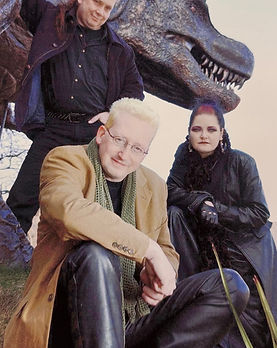
Artist Bio:
Hi I’m Joe Warner Cherrie, I am currently the technician / modelmaker based at the Mackintosh School of Architecture sited within the Glasgow School of Art. Having been a keen maker and artist from a very young age (both my parents and grandparents also being very creative), my initial career path upon leaving school was as a young modelmaker with ‘Angus Modelmakers’. Working on oil industry, engineering, architectural, defence and presentation display models, and based within workshops in Glasgow, (with side deployment secondments to Aberdeen and Stavanger, Norway) this initial path provided me an excellent grounding in modelmaking as a career.
After a number of years working as part of the modelmaking team at ‘Angus’, I was approached by the then Depute Director of Glasgow Museums who were looking for a modelmaker from the professional field to oversee the restoration of the Museum of Transport’s extensive model collection prior to the move from its previous home on the south of Glasgow to the Kelvin Hall site.
A few years as a specialist with the Royal Air Force followed, again primarily working on modelmaking, after which I took some time out to study Design Engineering, initially at Caledonian University before transferring to post graduate study at Cranfield University, Cambridge. Concurrent at this time I created my own modelmaking and design company, ‘SpotOn Designs’.
Artist Statement:
My current position is as Modelmaker / Technician helming the small albeit busy workshop at the Mackintosh School of Architecture based in the GSA. Bourdon Building. Although our main customer base is primarily architectural students working on various modelmaking projects, I feel it is important to remain accessible as much as possible, sharing practice, specialist knowledge, and assisting individual students from across GSA. and its Design, Innovation and Fine Art Schools, each with their own varying and distinct requirements.
I very much endeavour to keep up to date with current materials and evolving practice. It is interesting to look back upon my own career, what was once ‘normal practice’ in some areas has become an unacceptable risk process, or the at times scary realisation that some materials, once commonplace within a workshop environ, are actually potentially toxic or environmentally damaging, and should have no place in normal practice. I am very much of the mindset to try seek safer alternatives re. materials whenever possible.
The making field is ever evolving, although I have seen a resurgence in traditional making using hand crafts. This is an interesting juxtaposition with some embracing the digital, with virtual modelling or 3D printed pieces with others looking at materials such as textiles, glass and wood to achieve their message.
Personally have no preference in either, believing the need for a wide range of skills and processes, it is however heartening to see the need for physical making at all levels is as prevalent as it has always been.
10 Questions with Joe Warner Cherrie
Q.1:
Your career has taken you through professional modelmaking, museum restoration, specialist technical work, and higher education. Could you tell us about your journey into making and how those experiences shaped your practice?
Working extensively in various types of woods, plastics, metals and resins to achieve desired results, often at times to very tight timescales (100 hour weeks were not unheard of !) the tight timescales, and the need to work closely with others as part of a cohesive team on larger projects, helped foster a positive, sharing and problem solving ethos which has carried throughout my career.
This led to an intensive restoration programme of over 160 ship models over a one year period, creating the Museum’s famous ‘Clyde Room’, as well as directly working on a number of museum projects requiring my specific specialist input.
Locomotive restoration, horse drawn wagons, motor vehicles, bicycles, and everyday objects, as well as the instigation and curating of a number of exhibitions during that time.
Working at the Museum’s gave a direct insight into my own professional research practice, bridging technical theory with real world application, as well as the interesting co working and sharing with others in adjacent fields of interest.


Q.2:
Throughout your career you’ve worked across museums, exhibitions, film, television, and large-scale reconstruction projects. What have these experiences taught you about making?
My own business practice initially built upon contacts within the museums community, initially in Glasgow and London, which quickly grew to encompass a wide variety of projects with an ever increasing range of clients, museums, exhibitions, industry, film, TV. theatre.
I have been lucky in my own interests in palaeontology have come to the fore with regard some of my more sizable projects.
An initial joint venture with another Glasgow based modelmaking and propmaking company, ‘The Quickening’ led to the creation of the world’s largest reconstruction of a Tyrannosaur, ‘Millie’, for an exhibition at Glasgow University’s Hunterian Museum.
This in turn led to further joint contracts working on various film and TV. projects, as well as a contract with Isle of Wight ‘Dinosaur Isle’ museum, creating full scale reconstructions of a number of dinosaurs and their surroundings, based upon fossil remain finds in the area.


Q.3:
Alongside your own professional projects, you’ve spent many years supporting students and makers within educational environments. What role does sharing knowledge play in your work today?
An opportunity arose to apply for a multi disciplinary technical position at Glasgow School of Art, primarily embedded with their Product Design / Product Design Engineering departments, then based at the GSA. Foulis Building. This allowed me to share my accumulated technical knowledge base, assisting staff and students helping realise their project works as required.
Changes in structure brought about a centralisation of the school’s technical staffs, under the umbrella of TSD., although my primary tasking remained supporting GSA.’s Design School at the Reid and Haldane Buildings.
My current position is as Modelmaker / Technician helming the small albeit busy workshop at the Mackintosh School of Architecture based in the GSA. Bourdon Building. Although our main customer base is primarily architectural students working on various modelmaking projects, I feel it is important to remain accessible as much as possible, sharing practice, specialist knowledge, and assisting individual students from across GSA. and its Design, Innovation and Fine Art Schools, each with their own varying and distinct requirements.

Q.4:
Materials, tools, and workshop practices have changed significantly over the years. How have you seen the field evolve, and what developments do you consider particularly important?
I very much endeavour to keep up to date with current materials and evolving practice. It is interesting to look back upon my own career, what was once ‘normal practice’ in some areas has become an unacceptable risk process, or the at times scary realisation that some materials, once commonplace within a workshop environ, are actually potentially toxic or environmentally damaging, and should have no place in normal practice.
I am very much of the mindset to try seek safer alternatives re. materials whenever possible.
Equipment too has evolved, the machines themselves, and use thereof, have become (hopefully) safer and more intuitive for use.
I am a strong advocate of student inductions as well as continual learning, again sharing experience and knowledge (one is never too old to stop learning, indeed some of the student projects over recent years have led me to develop further my own practices and gain new techniques)
Q.5:
You often work at the intersection of traditional craftsmanship and contemporary technologies. How do you view the relationship between new tools and established making skills?
Some now everyday processes are still seen as ‘new technologies’ by many, such as laser cutting and 3D printing.
Looking back, both of these were emerging tech when I set out on my own career path, indeed ‘Angus Modelmakers’ were amongst the first to use acrylic laser cutting and engraving for their model projects.
I well recall some saying these would replace traditional modelmaking, it is interesting to see the opposite in fact has happened and both laser cutting and 3D printing are just more useful tools for use in creating our works.


Q.6:
Making rarely follows a perfectly smooth path. How do you approach setbacks, unexpected challenges, or moments when a project isn’t progressing as planned?
Making is a personal and creative process in itself, flexibility is one aspect which is very useful when trying to achieve a work as a whole.
Things at times do not go as planned requiring rethought in construction or materiality, at other times a piece is not progressing as initially planned and may require a resetting.
It is good to be able to take a sit back from the work to contemplate and analyse moving forward.
I personally have found it is at times better to restart anew then persevere with an ever spiralling downward piece which I would be unhappy with upon completion.

Q.7:
When starting a new project, how do you develop an idea and prepare for the making process?
From a personal viewpoint, which may also read across as possibly good practice for others looking to work on creative tasks ?
When starting out on a project, I endeavour to collate as much background material as possible, drawings, photographs, sketches, anecdotal notes, all can add information to the whole.
Before committing to a make or build, I usually try to sketch out or ‘doodle’ how I envisage the final piece to look, this process is subject to continual revision as the project progresses, but I have found it gives a mind image of the achievability of the work and help address any potential issues.
Q.8:
Your projects involve working with a wide variety of materials. How do you decide which materials are appropriate for a particular piece?
I have no real preference concerning materiality for my own works, utilising what is hopefully the most suitable for the project.
Aspects such as suitability, safety, cost and material durability all have their place in such decisions depending on requirements with regard longevity or siting.

Q.9:
Many of your works contain subtle details that may not be immediately visible. Do you think about storytelling when making?
I recall reading in a historical treatise about medieval sculptors ‘putting themselves into their works’
My own works I too try to add something of myself, one example being the various dinosaur reconstructions completed, I have always tried to add a subtle ‘storytelling’ aspect, wither it being something humorous, or an item embedded or hidden from normal view.
Similar practice even took place in professional modelmaking areas, where miniature figures would be added unseen or a deliberate tweak is added.
(a light hearted example being a model I worked on of the military base at Faslane where the models footprint area was ‘extended’ to include the ‘peace camp’ !)


Q.10:
Looking at making today, what excites you most about its future?
The making field is ever evolving, although I have seen a resurgence in traditional making using hand crafts.
This is an interesting juxtaposition with some embracing the digital, with virtual modelling or 3D printed pieces with others looking at materials such as textiles, glass and wood to achieve their message.
Personally have no preference in either, believing the need for a wide range of skills and processes, it is however heartening to see the need for physical making at all levels is as prevalent as it has always been.